
Welcoming people in
Bless this mess

As newlyweds, we happily rearranged our furniture every Tuesday night, so we could squeeze 10 other adults into our one-bedroom apartment for Bible study. We didn’t have nearly enough seats for everyone, so I’d bring the youth group cushions over with me on my way home from work, across the road at our church. One week I was sick in bed, but still saw most of the group as they crept past me throughout the night, needing to use the only bathroom (an ensuite). It was squishy, intimate and relaxed. We loved it.

Having people over without needing to tidy the place perfectly beforehand was something we prioritised. We wanted people to be welcomed in to the reality of our lives, rather than saying no to an impromptu visit because we hadn’t had a chance to make things look ‘nice enough’ for them first.
As we added kids to the mix, that became not just a value, but an essential practice - if we’d waited until the house was tidy before people could come have a cuppa, with a 2 year old and newborn twins, then we would never have had people over again!
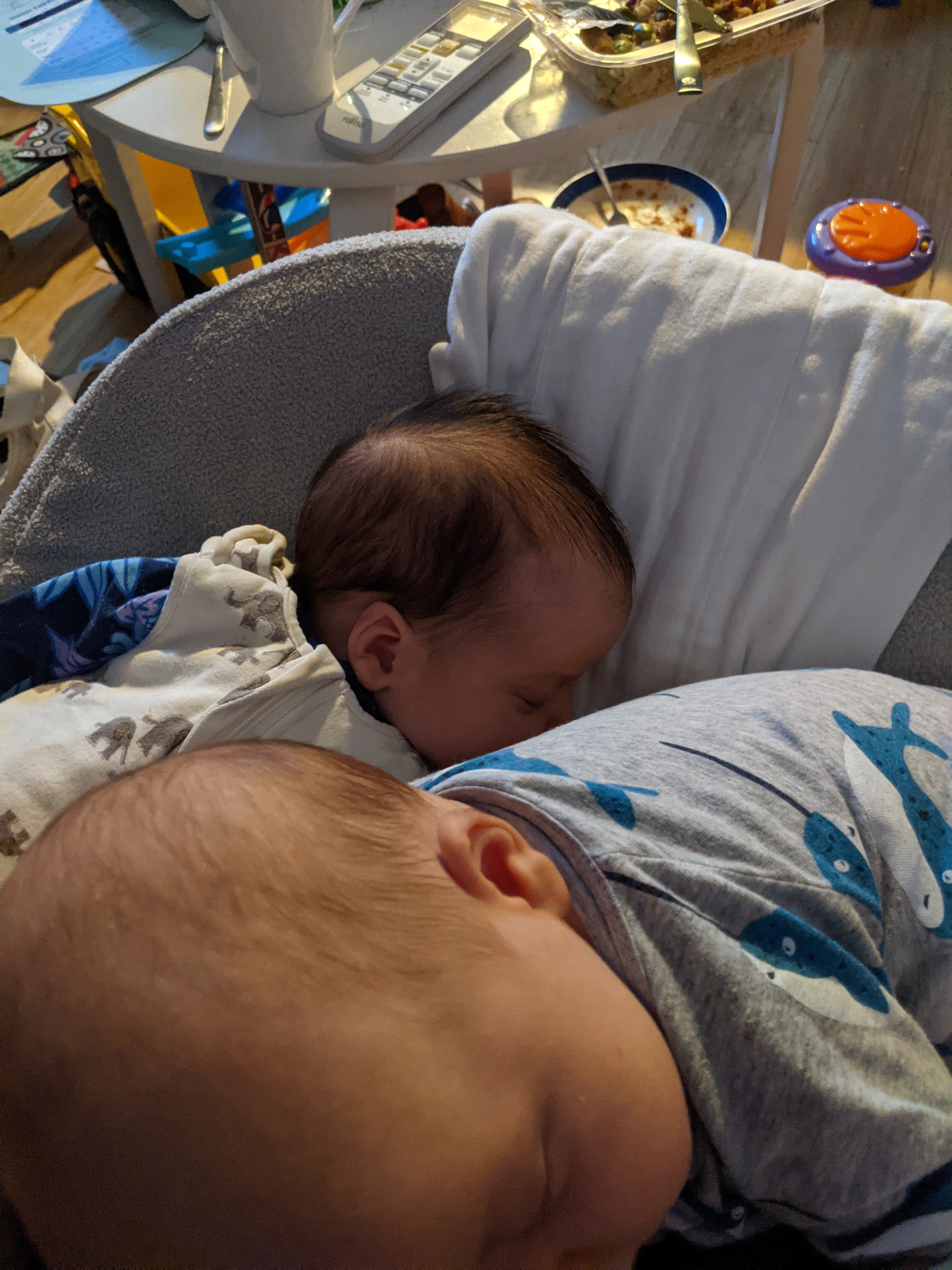
I have to confess, it was harder for me to keep holding to this value, knowing how much people judge women for the cleanliness of a house.1 It turns out almost all of us assume that tidying up and cleaning is the woman’s role, whereas for us, it was often my husband’s job, as the one with the useless nipples. Breastfeeding our eldest, and then twins, meant I had a full-time load just keeping up with the milk demands of our new tiny family members, let alone doing anything else around the house.2 Mostly I managed to roll with it, trying not to assume people were judging me for the state of my house while they picked their way carefully through the toys on the floor, to perch on top of the perpetual, regenerating laundry pile. Mostly.
When we moved to France, I wasn’t sure if we’d be able to continue to hold onto this value. French people are sophisticated, I’d heard, always well dressed and with their tables set to perfection. French people cook up multiple courses and eat lunch from midday to 5pm.3 Will it be rude, I worried if we’re too relaxed about having people over, too Aussie? How can we be hospitable in France, without erasing who we are?
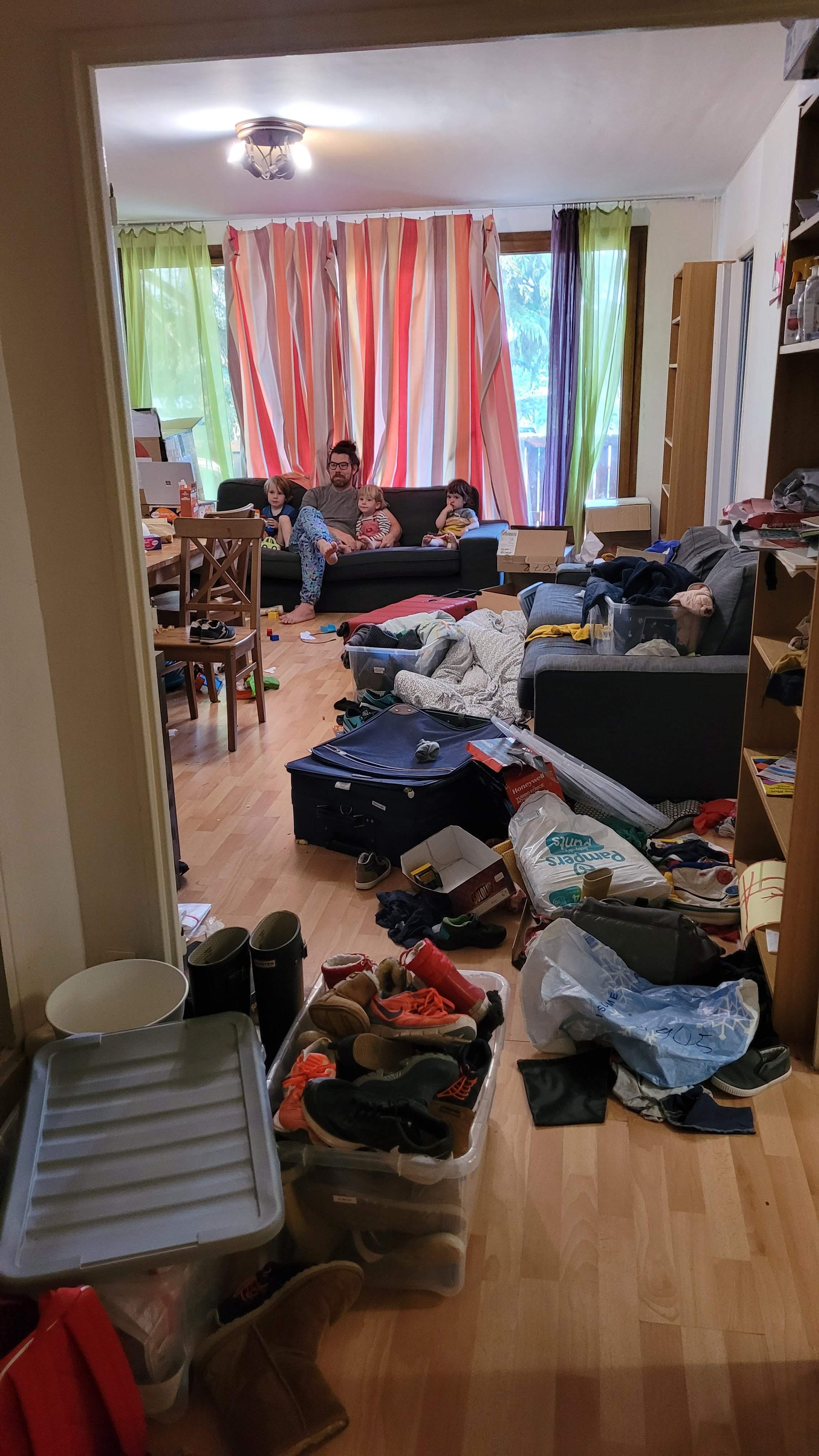
It turns out that prioritising tidying up wasn’t even within my control, so wondering about how it would impact hospitality in our new home was fairly pointless. We’d moved countries with three children (aged 3 and under), who were perpetually catching viruses. My husband and I were both under immense stress, as we adapted to life in a new and very different country, moving house twice the first year, a third time the year after. Tidying was going to have to wait, while the lower levels of our new hierachy of needs were met: sleep, time to talk with friends, running to reduce cortisol levels (now perpetually streaming through our bodies), sleep, moments to create, time to cry and pray, more sleep.
More than the physical messiness though, I was messy. Being emotionally vulnerable isn’t off brand for me, but at least in Australia, it was my choice. I’d cry unexpectedly over small things, like getting lost trying to find the ketchup at the giant grocery store, and big things, like the bakery letting me come back to pay for my baguettes later, when my card unexpectedly wouldn’t work. I had no words to explain or ask for their kindness, they just gave it. Without any words, I’d just cry in response - not a lovely, sweet tearing up, more the uncontrollable public crying that tells everyone that you’re dealing with an enormous loss. And, unbeknownst to me, I was. I was grieving the death of myself as a capable adult. The woman who was able to be friendly to neighbours, who knew the answers to her children’s questions about what to expect in their day at school, who could drive while holding a conversation and park without feeling like a learner driver all over again4, who could go to the grocery shop and leave with everything on the list, rather than just the 5 things she found before her brain literally couldn’t take anything else in and she had to leave: that woman was dead, gone, nowhere to be found.
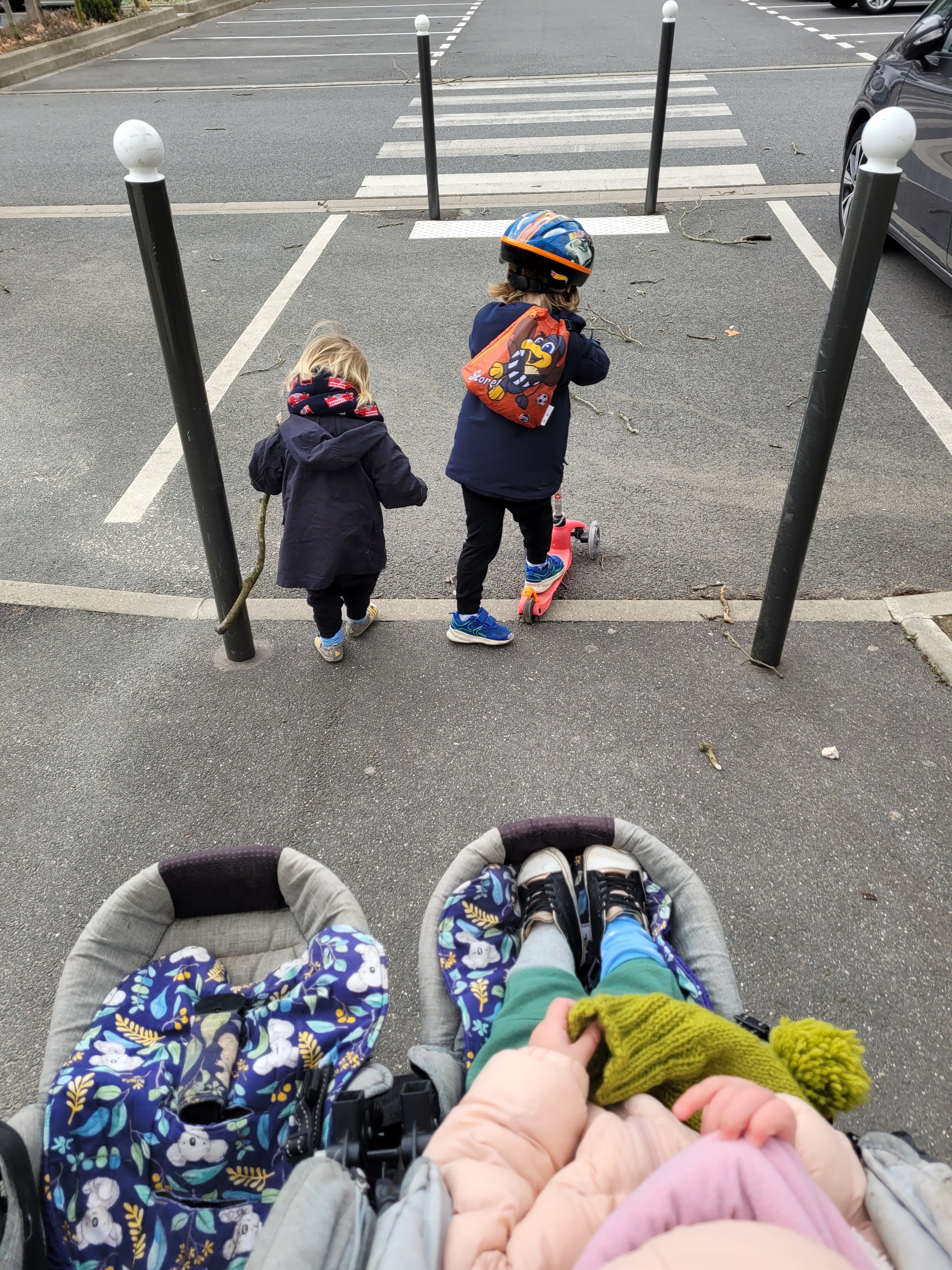
I didn’t want to invite people into the mess. They didn’t know me as a capable and “normal” person from before, they wouldn’t be reassured that this was just a stage, a blip. The people I met in France wouldn't see me leading confidently at work, creating and sourcing curriculum, coordinating kids’ ministry teams across different sites, developing leaders with (hopefully) helpful feedback and encouragement, praying we would all become more like Christ. They wouldn't even see the me who juggled twins and appendicitis, who welcomed help into the mess and cried at the stress - vulnerable, but doing an incredible job nonetheless. They only knew this strange, messy version of me, and without my past self for context, they might assume (horror of horrors) that this incapable, needy, helpless person was all there was to me.
All they would see was me nodding along furiously to a conversation, but understanding almost nothing, evidenced by my blank, panicked face when I realised a question had been thrown my way.
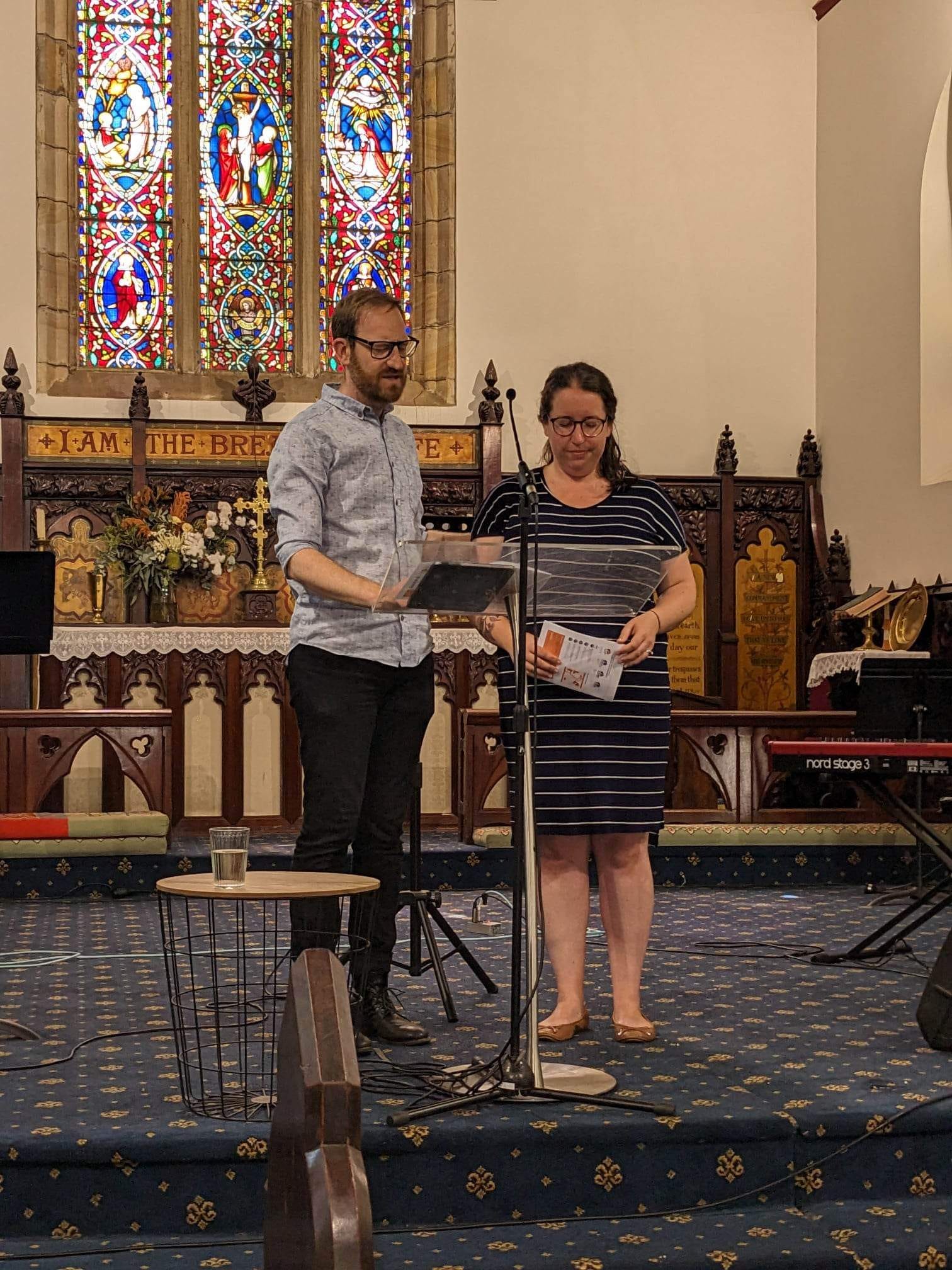
They'd see me out at the park with my kids, all shivering and complaining that they want to go home - because I didn’t even think to buy mittens and it was too cold to touch the play equipment (turns out Sydney winters are more like late spring in Europe).
Maybe they’d even see me through the window at school, crying all over my child’s teacher as I struggled to mime my way through a parent-teacher interview.

In short, they wouldn't see me as someone to compare upwards with, but someone to compare downwards to - someone they might choose to be kind to, but without expecting much in return. I was no longer welcoming people into my home as hospitality. Instead, I required welcoming from others everywhere I went - as a lost, often sad, confused sojourner. And I didn't even have a choice about it.
I was suddenly the person other people could thank God that they weren't like.
“Can you imagine being so rude as to not start the conversation with bonjour? Everyone knows you're meant to do that!”
“Those kids are so loud, talking together on the train! I can't believe their parents aren't telling them off - we'd better go do it for them, otherwise they'll keep imposing on everyone else's right to quiet.”
“Oh my goodness, she sent her son to school without a coat? But everyone knows today is a coat day, regardless of the actual weather!”5
I hadn't realised before moving to France how much my sense of self was based on myself as a giver of hospitality more than a receiver, the scale always carefully balanced to be a bit more on the ‘giver’ side (based on my internal, infallible calculations). I was someone who was invited to parties, and could invite others back in return, who gave directions to people who was lost and could politely request directions myself if needed, who brought meals over when people were sick and was blessed for months with meals after the birth of my kids (I can't figure out how I was able to mentally balance this one - maybe I thought people getting to see two cute babies was my side of the equation, balancing things out?)

In those first few months in France, I could do nothing but accept the hospitality of others wherever I went, and no amount of mental gymnastics could put me in the position of ‘giver’ in return.
Part of the problem was that, in my study of biblical hospitality over the years, I’d always imagined myself as the one giving it - because that’s what the verses that speak explicitly about hospitality remind us to do! We’re told to offer hospitality without grumbling, to be hospitable, to not neglect it, to show it, all actions that are focused on what we give outwards to others.6 I thought of hospitality mostly as a gift I gave to others, because that’s where these verses place the focus.
I hadn’t factored in the relational aspect that’s always at play within hospitality. You always need at least one person to be the recipient, otherwise hospitality is just you sitting in your welcoming house, food on the table…on your own. It’s you being ready to welcome someone who’s new to town, by standing on your own in your bedroom - impossible. Hospitality always requires other people, to be the ones who are welcomed in! And Jesus has called me in my relationships with others, as his follower, to be filled with the fruit of the Spirit always, to be characterised by things like patience, self-control, and kindness, both when I am welcomed, and as I welcome others.
Almost 2000 years ago, Paul wrote a letter to a fledgling church in Philippi, a major Greek city at the time. In it, he encouraged the followers of Jesus, the Messiah, to welcome one another relationally, with humility:
“So if our shared life in the Messiah brings you any comfort; if love still has the power to make you cheerful; if we really do have a partnership in the spirit; if your hearts are at all moved with affection and sympathy— then make my joy complete! Bring your thinking into line with one another.
Here’s how to do it. Hold on to the same love; bring your innermost lives into harmony; fix your minds on the same object. Never act out of selfish ambition or vanity; instead, regard everybody else as your superior. Look after each other’s best interests, not your own.”
Philippians 2:1-4
These verses remind us that, whether we’re giving the invitation or receving it, whether we’re the one explaining the local custom or the person trying to figure out why all the shops are inexplicably closed, we are called to look after each other’s best interests, to treat others as important, rather than chasing importance ourselves.
My determination to be the one giving hospitality, to be the knowledgable one - in short, my lack of humility - was getting in the way of my ability to receive the welcome around me. To be clear, there wasn’t always a welcome given! There’s a reason French culture has a reputation for being closed and unwelcoming, because often (at least to me, as an Aussie) it is. People are quick to tell you when you’re doing something wrong, not to show you the right way in advance. But my desire to be thought of as better than others, to be seen as superior, was making the adjustment to the welcomes that were being given in our host culture more difficult than it needed to be.
Of course, there were times when I rightly needed to hold boundaries and not push myself beyond endurance. We are created beings, after all, and that comes with God-given limits. I'm not saying that every time I felt uncomfortable as I adjusted to life in France it was because of selfish ambition, or vanity. There were plenty of times it was just a natural response to the Nth thing going wrong that day, my nervous system alerting me that I had no more to give, that pushing through here would be like running another 5kms on a sprained ankle - a very bad idea. In fact, pushing through would have been vanity at work, trying to look more capable, and less human, than I am.
But learning to rest in my new role as an acceptor of hospitality, the one who is on the edges of social circles, the one who doesn’t get the joke, who doesn’t understand the acronym, who may not even understand the words that are being spoken, is a gift. It doesn’t exclude me from hospitality, it just excludes me from my self-given role as giver of hospitality. It’s often undeserved and unearned, and that reminds me of the even bigger gifts that I’ve been given by God’s grace: a welcome into his family that is undeserved, unmerited, free from hidden clauses and requirements. A gift.
We’re hosting our first ‘big’ event in France this weekend, a gathering of multiple groups of friends in our house for Friendsgiving. But even though we’re hosting, this time around I know that I won’t just have the role of giver of hospitality. I will be receiving it, too. And I’ve discoverd it’s the kind of hospitality I like the most.
This post is part of a blog hop with Exhale—an online community of women pursuing creativity alongside motherhood, led by the writing team behind Coffee + Crumbs. Click here to view the next post in the series "Hospitality."
“People hold women to higher standards of cleanliness than men, and hold them more responsible for it.” Read one study into this phenomenon here: https://journals.sagepub.com/doi/10.1177/0049124119852395
You can find the numbers on hours of breastfeeding throughout the first year of bub’s life easily via Google, or you can just take my word for it
Lunch doesn’t go for 5 hours every day, but that is a pretty normal length for a lunch party. Absolutely wild to me, from the land of invitations with start and end times!
We drive on the left hand side of the road in Australia, and the right hand side in France 🙃
Some of these imagined conversations are based from actual (very direct) feedback from French people, others inspired by my own fears once I realised the mistake I’d made.
You can read through a good summary of them here: https://www.gotquestions.org/Bible-verses-about-hospitality.html
Thank you for your vulnerability here! I loved your thoughts on being the receiver of hospitality… definitely not a side we think of as often, but so valuable!
The one with "useless nipples" is also the best picker-upper at our house🤣